



 +603 9021 3601
 +6019 3163 600
 enquiry_ch@real.edu.my


Parents today are raising children in a world shaped by constant technological change. Naturally, many want to know what this means for the classroom. Does technology improve learning, or does it create more distraction? Will digital tools strengthen understanding, or reduce the role of the teacher?
These are important questions. The answer lies not in whether schools use technology, but in how they use it. Effective ed tech does not replace teachers. It supports them. When used thoughtfully, it can deepen understanding, improve collaboration, and make learning more relevant to the world students are growing up in. UNESCO has been clear on this point: technology can enhance education, but it cannot replace a well qualified teacher and a well equipped classroom.
What a Modern Classroom Looks Like Today
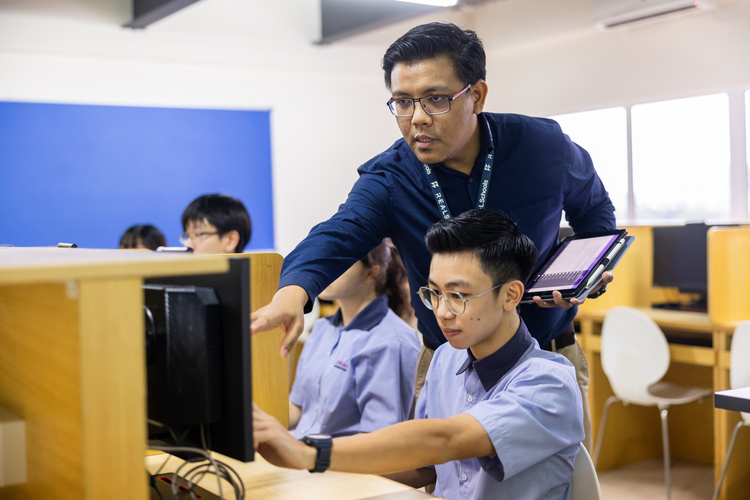
A contemporary classroom is very different from the one many parents remember. Students now learn through a combination of teacher explanation, discussion, visual content, collaborative tasks, and guided access to digital resources. In a strong classroom with technology, ed tech tools are used to make lessons clearer, more interactive, and more responsive to student needs.
For example, students may annotate texts on screen, review science simulations, collaborate on group tasks in real time, or receive quicker feedback on written work. These experiences can support digital learning by helping students engage more actively with the lesson instead of passively receiving information. OECD has noted that digital technologies can transform teaching and learning practices when used effectively, and that teachers play a critical role in shaping outcomes in increasingly digital learning environments.
Why Technology Should Never Replace the Teacher
The strongest classrooms are still built on human relationships. A teacher understands when a student is confused, when a child has lost confidence, or when a lesson needs to slow down or go deeper. Technology or Ed Tech cannot replicate professional judgement, emotional awareness, or the trust that makes students feel secure enough to ask questions and take intellectual risks.
This is why the most effective use of ed tech is guided use. Technology can present information, support practice, and widen access to resources, but teachers remain central in giving context, setting standards, asking the right questions, and ensuring that learning is meaningful. OECD’s recent work on digital education stresses that effective technology use requires teachers to adapt pedagogy carefully, not simply reproduce old teaching methods on a screen.
How REAL Schools Approaches Ed Tech
At REAL Schools, technology is positioned as part of a balanced learning environment rather than an end in itself. REAL Schools publicly states that its 1-to-1 iPad Programme is integrated into the school system and curriculum, and that this implementation is supported by teacher training and preparation. REAL Schools also states that it partnered with Apple as part of this programme rollout.
This matters because thoughtful implementation is what gives parents confidence. A school may have devices, but that alone does not create better learning. What makes the difference is whether teachers are prepared, whether classroom use is purposeful, and whether digital tools support the curriculum rather than distract from it. REAL Schools has communicated exactly this principle, noting that technology only enhances learning when it is meaningfully integrated into the curriculum and accompanied by sufficient teacher training.
Supporting Engagement, Understanding, and Collaboration
When used well, digital learning can strengthen three important areas of classroom life.
First, it can improve engagement. Many students respond well to a lesson that includes visual explanation, immediate interaction, and varied modes of participation. Technology can help bring abstract ideas to life, especially in areas such as science, mathematics, languages, and design.
Second, it can improve understanding. Some students benefit from being able to revisit explanations, organise ideas visually, or test concepts through guided digital activities. This can help teachers differentiate instruction more effectively and support students with different learning needs.
Third, it can improve collaboration. In a classroom with technology, students can work together on presentations, research tasks, and shared responses while learning to communicate clearly and contribute responsibly. These habits mirror the collaborative expectations they will face later in university and working life. UNESCO and OECD both emphasise that digital innovation can enhance the relevance and quality of learning when it is applied appropriately and supported by capable educators.
Preparing Students for Contemporary Life in Ed Tech
Parents are right to expect schools to prepare children for the world as it is now, not as it was ten or twenty years ago. Students need to be academically strong, but they also need to know how to use technology responsibly, think critically about information, and work confidently in a modern environment.
REAL Schools frames its mission around nurturing learners with future proof skills, values, and resilience, and its broader school messaging emphasises holistic development alongside academic growth. Within that context, the thoughtful use of ed tech is part of preparing students for life beyond the classroom. It supports not only knowledge acquisition, but also organisation, communication, and adaptability.
A Balanced Choice for Parents
For parents, the key issue is balance. Too little exposure to technology may leave students underprepared for the realities of higher education and modern work. Too much unsupervised technology may weaken focus and reduce meaningful interaction. The right school finds the middle ground. REAL Schools presents a model that many parents will find reassuring.
Its public materials describe a safe and supportive environment, a commitment to holistic development, and an ed tech programme that is integrated into the curriculum rather than treated as a novelty. Combined with teacher guidance and training, this creates a learning experience that is current, structured, and educationally sound. In the end, parents do not have to choose between strong teaching and modern tools. The best schools know how to bring both together. When teachers remain at the centre and ed tech is used with care, students gain the contemporary knowledge, confidence, and learning habits they need to thrive.
Discover how REAL Schools integrates ed tech thoughtfully to support effective, balanced, and future focused learning. Visit REAL Schools to learn more or arrange a school visit today.